What Is Liminality? The Ancient Concept That Explains Everything Right Now
“In the universe, there are things that are known, and things that are unknown, and in between them, there are doors.”― William Blake
There's a word that keeps surfacing in conversations about art, politics, grief, and culture, which is often used by people who may not even know where the concept arises from. That word is liminal.
You've probably seen what it feels like. Liminal spaces went viral as an aesthetic: empty shopping malls at 2am, fluorescent-lit hallways, backrooms with strange carpet patterns that stretch into nowhere. The images are simultaneously unsettling, nostalgic, and weirdly beautiful. People knew what they were pointing at even if they couldn't name it…that feeling of being between, between somewhere and nowhere, between what was and what comes next, the subtle line between childhood and adulthood, and, in the words of The OA: “a border that’s hard to define.”
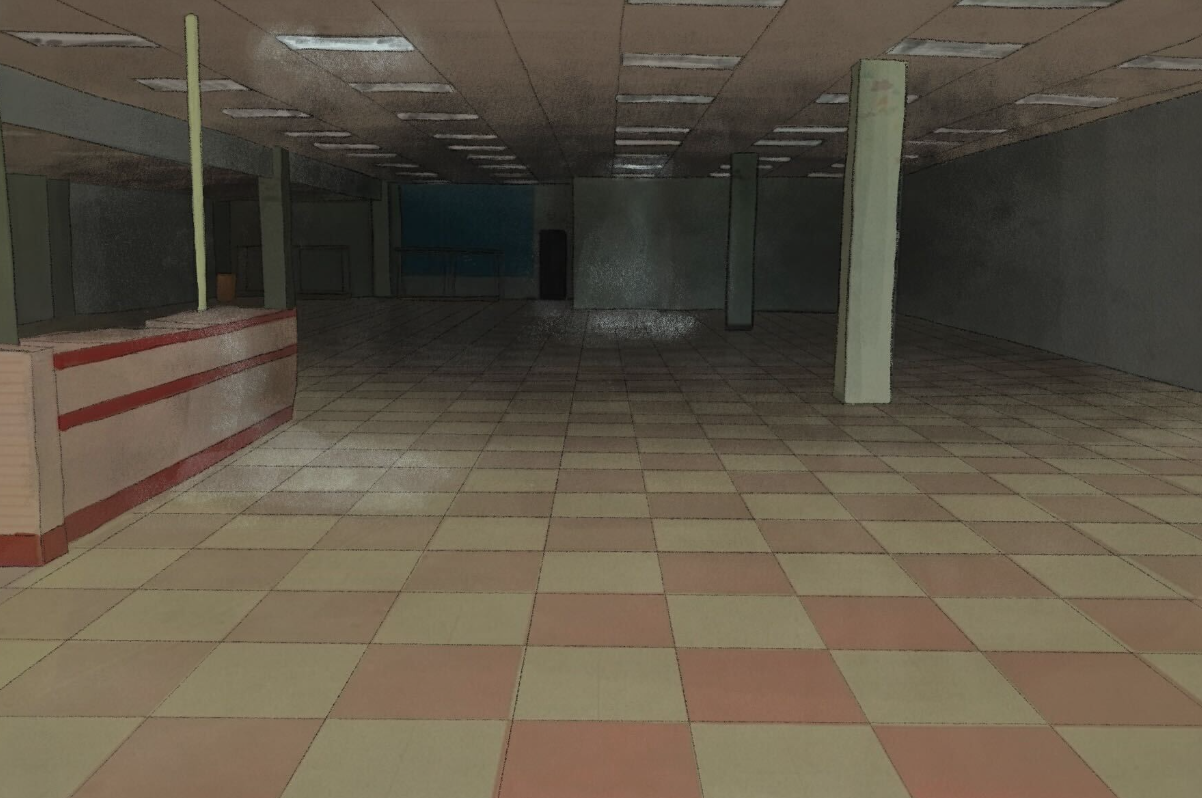
Liminality isn't just an internet aesthetic, it's an anthropological concept with deep roots. Once you understand it properly, you then begin to start seeing it everywhere — in your dreams, in the films that haunt you, the art that stops you in your tracks, and the cultural moments that feel like the ground is shifting underfoot.
Arnold van Gennep and the Rites of Passage
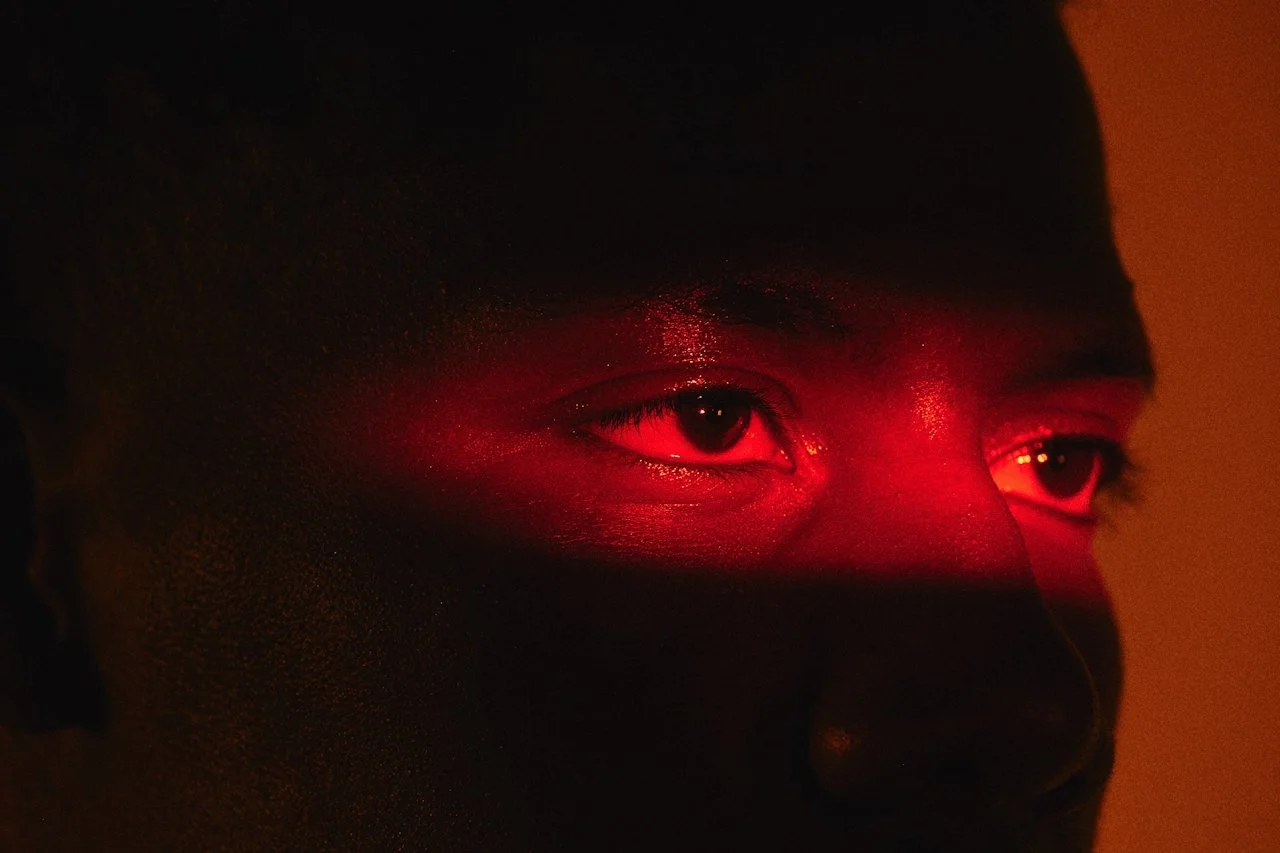
In 1909, French anthropologist Arnold van Gennep published Les Rites de Passage, which is a study of how human societies mark transitions. Birth, puberty, marriage, death. Every culture, he observed, handles these crossings with ritual, and every ritual follows roughly the same three-part structure.
First: separation. You leave behind your old identity, your old world.
Second: the liminal phase, from the Latin limen, meaning threshold. You are neither what you were nor what you will become. You exist in a kind of sacred suspension.
Third: reincorporation. You emerge on the other side, changed, and are welcomed back into the community as someone entirely new.
The liminal phase is the strange middle. It's the wilderness before the promised land, the chrysalis before the butterfly, the initiate before they rise toward becoming an adept.
Anthropologist Victor Turner, who picked up van Gennep's work in the 1960s, described liminal beings as those who are "betwixt and between,” which means they no longer belong to the past, yet haven’t quite arrived into the future. While their old identity has been stripped away, what they become next is still being decided.
Why It Hits Different Now
What makes the concept so electric, and affecting, at this particular moment, is because it feels like we're living inside a collective liminal phase with no clear ceremony, or resolution, on the other side.
The frameworks that oriented people—institutional, religious, political, even psychological— are visibly in a chaotic form of flux.
Old systems are breaking down faster than new ones are forming, but there's no elder council to receive you when you pass through the other side. There’s no communal fire, just the threshold itself, extended, indefinite, lit by phone screens.
It’s uncomfortable, and confronting. But, and the same time, it's also, historically, when the most interesting things tend to get made.
Art That Lives in the Threshold
Stalker trailer
Some of the greatest artists of our time have always been cartographers of liminal space.
Consider, Maya Deren, a Ukrainian-American filmmaker and choreographer who made some of the most formally radical short films in cinema history on no budget, and often in her own house, with herself as subject. Her 1940s films Meshes of the Afternoon and At Land are pure liminal experience—women caught in loops, unable to complete transitions, perpetually crossing thresholds that open onto other thresholds. There is no resolution, no arrival. Just the crossing, endlessly repeated. She essentially invented American avant-garde film, and almost nobody knew her name until decades after she died.
Then there’s Soviet filmmaker Andrei Tarkovsky. His 1979 film Stalker is structured almost like a ritual—three men enter a forbidden zone, guided by a figure who knows the terrain but can never explain it. The Zone has its own logic, which is to say it has no fixed logic at all. The direct path is never safe, rules shift without announcement, and the destination, a room said to grant your deepest wish, may or may not exist. The film doesn't resolve so much as exhaust itself. While most cinema wants to get you somewhere, Stalker wants you to forget that somewhere exists.
Thai filmmaker Apichatpong Weerasethakul also makes films that feel like thresholds between sleeping and waking, between memory and forest, between the living and the dead. His 2010 film Uncle Boonmee Who Can Recall His Past Lives won the Palme d'Or — the highest honor in world cinema — and barely caused a ripple in mainstream culture. Which is, in its own way, very liminal.
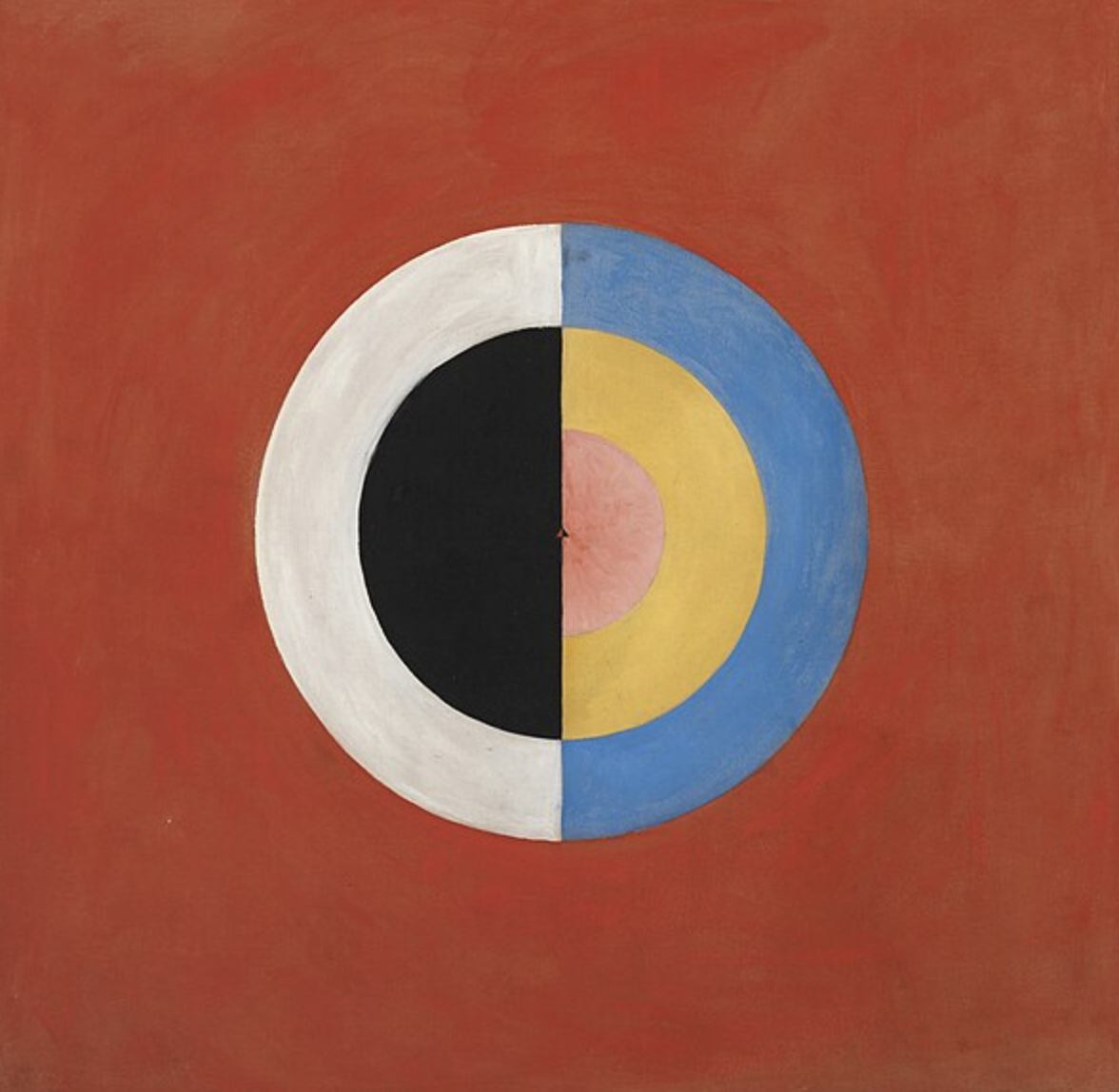
hilma af klint "Svanen, nr 17, grupp IX/SUW, serie SUW/UW", 1915. Stiftelsen hilma af Klints Verk. Photo: Moderna Museet/Albin Dahlström.
In visual art, Hilma af Klint spent decades painting for an audience she knew hadn't arrived yet. The Swedish artist was making fully abstract work before Kandinsky and Mondrian became the names history attached to abstraction, but she locked her paintings away with instructions not to show them for at least twenty years after her death. She was literally painting from inside the threshold, creating work that existed between worlds, waiting for the reincorporation that would finally come. It came, and the Guggenheim's 2018 retrospective was one of the most attended exhibitions in the museum's history.
The Aesthetics of Nowhere
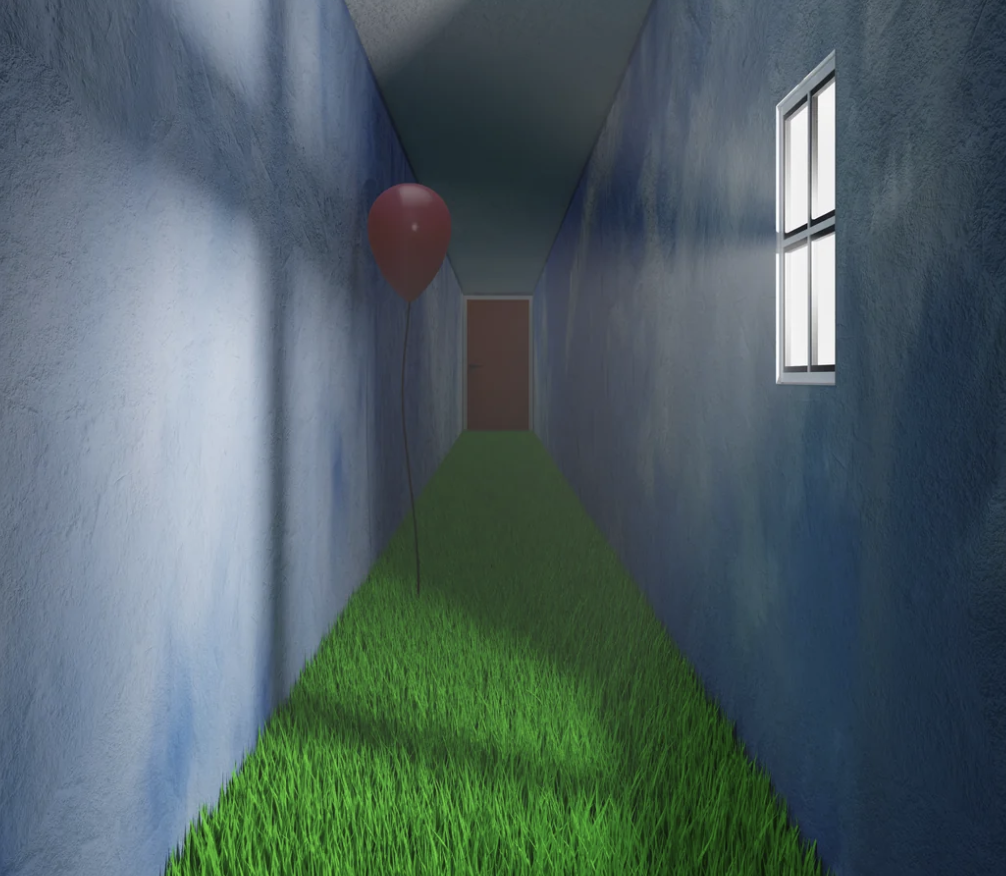
Now, let’s go back to the viral liminal spaces for a second.
Those images resonated because they activated something real: the uncanny sensation of a space designed for transition (a corridor, a waiting room, a parking garage) caught at a moment when no one is transitioning through it. Liminality frozen. Movement without movement. The form of passage without the fact of it.
What the aesthetic missed is that liminality, in van Gennep and Turner's framing, is generative not just strange and unusual. The threshold is where transformation happens, even if it may be unsettling in the journey. You can't skip it, and you can't fast-forward through it. You have to go deep into the wilderness before you come out the other side.
The question isn't how to avoid the threshold. It's what you do while you're standing on it.
Learning to Read the In-Between
What liminality offers, as a concept, is a way to make meaning out of suspension, and offer a form of grammar for the gap.
When a film refuses resolution, holds you in uncertainty, asks you to sit with ambiguity, and withholds the comfort of arrival— it's mirroring back the actual texture of being human, which is mostly transitional. Mostly in-between.
The same goes for the art, music, rituals, and cultural moments that feel genuinely significant.
Van Gennep understood this over a century ago, Turner built on it, and every artist who has ever made something that makes the hairs on your arms stand up has intuited it. The 2o25 book Healing the Liminal by Marcella Kroll, uses story to take you deeper through the realm so you may emerge with new understand.
The threshold is not a place to escape from, it's a place to evolve through as you ascend to higher levels of consciousness and more expansive forms of awareness.
Further reading: Arnold van Gennep, "The Rites of Passage" (1909) · Victor Turner, "The Ritual Process" (1969)