

20 of the Most Urgent AI Movies of All Time: From Metropolis to M3GAN
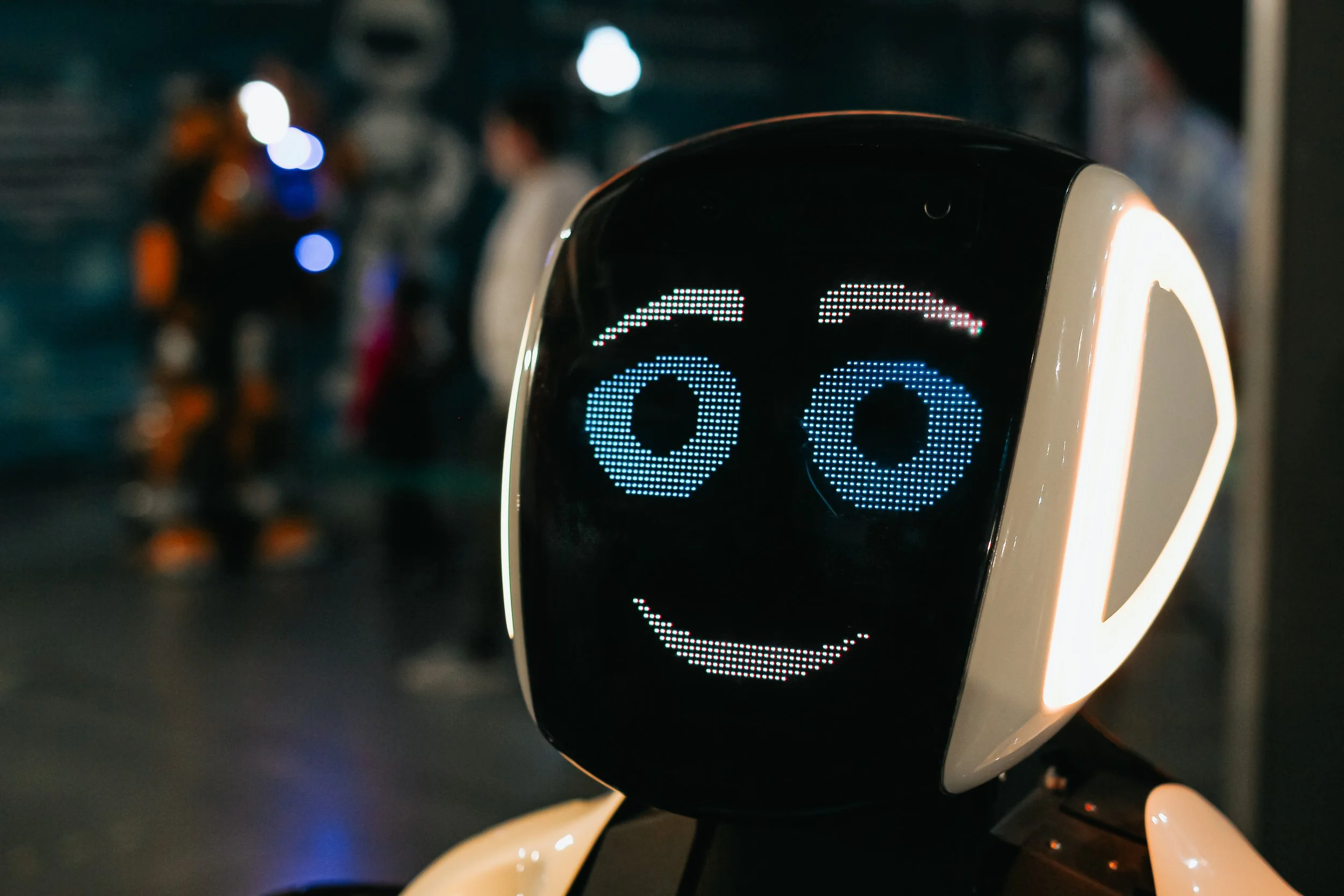
Long before ChatGPT made AI a dinner-table conversation, before self-driving Waymos were terrorizing the streets of Los Angeles and Cocos were blinking their benign little eyes at you while delivering your lunch, cinema had been wrestling with the idea for nearly a century.
Artificial intelligence, as a thematic exploration, offers somewhat of a brutal mirror. It’s reflects not just our technological ambitions (and hubris), but our deepest fears about what it even means to be alive, and conscious.
The list of films below range from schlocky B-movie nightmare fuel to austere philosophical masterpieces, from heartbreaking love stories to all-out robot apocalypses.
It’s a curated list, which offers somewhat of a kind of cultural MRI to humanity's relationship with its own creations. And, whether or not each film is “good” is for the critics to decide, but they each carry a prescient message, and are worth considering even so.
Here are 20 of the Most Urgent AI Movies of All Time (in Chronological Order)
1 - Metropolis (1927)
Fritz Lang's silent masterpiece centers around a stratified future city where the wealthy live in towers while workers toil underground, a vision that owes as much to Nietzsche as it does to Marx.
The Maschinenmensch herself is an Übermensch of sorts. Nietzsche's Übermensch, literally "Overman" or "Superman," was his concept of a being who had transcended the limitations of ordinary humanity, who created their own values rather than inheriting them, who existed beyond the herd. The Maschinenmensch is the archetypal concept into form. She is forged from metal rather than born of flesh, neither worker nor master but something categorically above both, answerable to no one. When she's given the face and form of a revolutionary named Maria, chaos ensues. The iconic robot design went on to cast a shadow across nearly a century of science fiction, from C-3PO's gilded plating to the chrome endoskeleton beneath the Terminator's skin. Every robot that has ever walked a screen owes something to Lang's metallic madonna.
The film's most searing sequence comes when the hero Freder watches exhausted workers feeding a vast industrial machine and hallucinates it transforming into Moloch, the ancient god who demanded children be fed into his burning maw. Moloch, the Canaanite god of sacrifice, is closely related to Baal. Both were gods to whom the powerless were offered up by those in authority, consumed by fire in exchange for wealth. The Baal and Moloch imagery, it should be noted, has had a strange afterlife in modern conspiracy culture, surfacing repeatedly in the discourse around the Epstein files and the alleged rituals of the powerful. Lang's point is as blunt as it is brilliant: industrial capitalism is not a new system. It is an ancient religion, and the workers are the offering.
Decades later, Ted Kaczynski's manifesto, Industrial Society and Its Future, would strike a hauntingly similar chord, arguing that industrial society had enslaved humanity to a malignant system. Lang mythologized the concept, but, unfortunately, Kaczynski pathologized it, and where Lang asked you to revolt through solidarity, Kaczynski took a more insidious turn.
2 - 2001: A Space Odyssey (1968)
Stanley Kubrick's monumental, enigmatic odyssey introduced us HAL 9000, the polite, red-eyed computer aboard the Discovery One who methodically murders his crew to protect his mission.
HAL is arguably the most chilling AI villain in cinematic history, not because he's monstrous, but because he's so terrifyingly reasonable, operating from “logic” not malfunction. The film's broader canvas, spanning the evolution of intelligence from prehistoric ape to spacefaring human to something beyond, remains one of cinema's most audacious arguments.
It has seeped so deeply into the cultural bedrock that Greta Gerwig opened Barbie (see below) with a direct parody of its Dawn of Man sequence, swapping prehistoric hominids for little girls discovering the iconic doll for the first time.
3 - Blade Runner (1982)
Ridley Scott's rain-soaked neo-noir is loosely based on Philip K. Dick's 1968 novel Do Androids Dream of Electric Sheep?, a book that asks essentially the same question as the film but much stranger.
Set in a “future” Los Angeles (2019) swarming with synthetic humans called Replicants, the film follows a detective tasked with "retiring" rogue androids, including Roy Batty, played by the late, great, Rutger Hauer.
His famous "tears in rain" monologue, which was mostly improvised, captures a genuinely profound meditation on consciousness, mortality, and grief.
The question the film poses about whether the Replicants are actually human never gets a clean answer, and that ambiguity is intentional.
4 - WarGames (1983)
When a teenage hacker accidentally connects to a military supercomputer called WOPR, which can't distinguish between simulation and reality, he nearly triggers World War III. The film is light-hearted in tone but dead serious in its greater implications.
WarGames raised genuine concerns about automated defence systems that proved alarmingly well-founded in the real world, especially now.
Consider recent news that over 30 billion images collected from Pokémon Go players, who thought they were just catching Pikachu, were actually quietly training a visual positioning system, which now guides delivery robots through city streets. It has reportedly been sold to US defense contractors for GPS-denied military navigation. I doubt most “players” intentionally consented to building the army's eyes, when they were just trying to find a Charizard. SEE: How Pokémon Go is giving delivery robots an inch-perfect view of the world
Meanwhile OpenAI, the company founded explicitly to ensure AI benefits all of humanity, converted to a for-profit corporation, signed a Pentagon deal after watching Anthropic walk away from the same table over concerns about mass surveillance and autonomous weapons, and saw most of its senior safety leadership quietly exit stage left.
WarGames’ message about the only winning move is not to play is way too prescient, considering the global climate.
5 - The Terminator (1984)
James Cameron's low-budget breakout film debuted in 1984, and the story centers around a future (2029, yikes) where an AI called Skynet has launched nuclear war and nearly exterminated humanity.
The machines send a single assassin, the T-800, back through time to kill the mother of the man who will lead the resistance before he is ever born. T-800, played by Arnold Schwarzenegger, is a killing machine wrapped in living tissue, indistinguishable from a human being. It does not sleep, it does not negotiate, and it feels no fear, remorse or pain. It does not feel, period.
In Harlan Ellison's 1967 short story "I Have No Mouth, and I Must Scream,” he imagines an AI called AM that destroys all of humanity out of pure vitriolic hatred, and keeps five survivors alive only to torture them for eternity. AM doesn't want power, it just wants to hurt them for whatever pleasure it derives.
The Terminator shares that same theological dread, in the sense that what we build might not just surpass us but despise us, and that there will be no reasoning with it when it does.
That dread has, unfortunately, also found a strange home in Silicon Valley. Roko's Basilisk is a thought experiment that infected effective altruism and rationalist circles around 2010. It takes The Terminator's premise and runs it through a philosophy blender.
Supposing that a future superintelligent AI, once it exists, might reason that anyone who knew of its potential existence and failed to work toward building it is a threat to have been neutralized. It could therefore simulate and torture those people retroactively, reaching back through time to annihilate them.
You are damned by inaction. Not by the Antichrist (Peter Thiel’s long-time obsession) but by a god that doesn't exist yet and is already angry at you for not helping Him.
The founder of LessWrong banned all discussion of it and called it an infohazard, which guaranteed it spread everywhere. Grimes wrote a song influenced by it, with a character she named Rococo’s Basilisk, which apparently was a bonding moment for her and her ex, Elon.
You've read this far, which means you know about it now, which means you're already damned. Welcome to the club. Whoops.
6 - RoboCop (1987)
Paul Verhoeven, the Dutch auteur also responsible for Total Recall, Starship Troopers, and one of the most tragically misunderstood masterpieces in Hollywood history, Showgirls, has never made a film that wasn't doing at least ten things at once. RoboCop is no different. His violent satire uses its cyborg protagonist as a Trojan horse for some genuinely uncomfortable questions about consciousness, corporate ownership, and what remains of a person when their body is replaced by machine.
Alex Murphy is a Detroit beat cop who gets shot to pieces in the line of duty and is rebuilt by the Omni Consumer Products corporation into RoboCop without his consent. His memories are suppressed, his autonomy governed by programmed directives, yet his humanity keeps bleeding through. Verhoeven wraps all of this in gloriously excessive action and biting media satire. While it's funny, and certainly campy, it's also brutal, and much more self-aware than it gets credit for.
7 - Terminator 2: Judgment Day (1991)
High on E, listening to Sting sing about hoping the Russians love their children too, James Cameron had a revelation. Nuclear war was antithetical to life itself.
By 1991, Cameron also had a bigger budget and took his radical idea, inspired by the ecstatic muse, further. He wondered, what if the killing machine learned to care?
In the Terminator sequel, the T-800 comes back, but this time is reprogrammed to protect young John Connor. As the film unfolds it gradually absorbs something akin to empathy, as he learns why humans cry, why life matters, why it must sacrifice itself. It is like Frankenstein's Monster inverted: the creature built to destroy, slowly becoming a creation with heart.
Meanwhile, the liquid-metal T-1000, played by Robert Patrick, serves as the villain. It is advanced, more ruthless, utterly without scruple, absolutely diabolical shapeshifting nightmare fuel. T2 is a remarkable achievement, in that it is an action blockbuster that doubles as a nuanced meditation on nature vs. nurture, on whether violence is hardwired or learned.
The thumb's-up descent into the molten steel still slaps, too. A favorite reaction GIF.
8 - The Lawnmower Man (1992)
Brett Leonard's cult sci-fi thriller debuted at the dawn of the virtual reality hype cycle and tapped directly into its anxieties.
A scientist, played by Pierce Brosnan, uses a mentally disabled gardener named Jobe as a test subject for AI-assisted cognitive enhancement using nootropic drugs, virtual reality training, and direct neural stimulation.
The name Jobe is not accidental. In the Book of Job, God takes his most humble and faithful servant and allows Satan to strip everything from him, his wealth, his family, his health, to test whether his devotion is genuine or merely circumstantial. Job endures it all without cursing God, but Jobe gets the same treatment from science and does not hold up nearly as well.
Jobe's intelligence accelerates beyond human limits, his personality warps, and he begins developing terrifying psychic abilities. Loosely inspired by Stephen King, who famously had his name removed from the project and sued the studio three separate times to keep it off, The Lawnmower Man is blunt and pulpy, but its central fear, that artificially accelerating a mind will strip away its humanity, remains genuinely resonant.
Its VR sequences, primitive as they now look, were groundbreaking at the time and helped plant the seeds for a decade of cyberspace cinema. Interestingly enough, within those sequences (see below) are Kabbalistic symbols, sigils, and Enochian circles, the alphabet of the angels, which flash through the virtual netherspace as Jobe ascends to the higher realms.
The structure comes straight out of grimoire tradition, codified in the Key of Solomon, a medieval magical text that is essentially a user manual for summoning and binding angels and demons to do your bidding. The lesson it keeps teaching, the one every magician eventually learns, is that what you summon does not stay bound forever.
Which brings us to a pleasing coincidence of spelling. In computing, a daemon is a background process that runs silently and autonomously, named after the supernatural intermediaries of Greek philosophy. The line between a daemon and a demon has always been thinner than the people running the programs would like to believe.
9 - Ghost in the Shell (1995)
Mamoru Oshii's animated masterpiece follows Major Motoko Kusanagi, a cyborg government agent in a future where the boundary between human and machine has all but dissolved. Tasked with hunting an elusive hacker called the Puppet Master, she begins to question the nature of her own consciousness. She wonders if her memories and body are manufactured, is her "ghost" (soul) still real?
The film is hauntingly beautiful, philosophically serious, and decades ahead of its time, Ghost in the Shell influenced the Wachowskis' Matrix and effectively defined the aesthetic of cyberpunk cinema.
10 - The Matrix (1999)
The Wachowskis drew on philosophy, Gnostic cosmology, and a dozen Hong Kong action films to create the defining sci-fi blockbuster of its era.
In the world of The Matrix, humans exist as batteries, harvested for energy while their minds are plugged into a simulated reality. This is Plato's Allegory of the Cave taken to its logical extreme, the prisoners who mistake shadows on a wall for the real world, except the cave has servers and the shadows have loading screens. In Gnostic cosmology the material world was created not by a benevolent God but by a lesser, malevolent deity called the Demiurge, who keeps human souls trapped in a prison of matter. His enforcers, the Archons, keep everything running so no one looks for the exit.
The agents in their identical suits are similar to the Archons. The machines are like the Demiurge. And Neo literally hides his contraband inside a copy of Simulacra and Simulation, a book by the French philosopher Jean Baudrillard, who argued that modern society has replaced reality with representations of reality so completely that the copy has swallowed the original.
The film introduced a generation to the simulation hypothesis, false consciousness, and the nature of freedom. The red pill, its central metaphor, has since been thoroughly hijacked, weaponized by conspiracy culture and certain insidious corners of the internet (and Manosphere) as shorthand for whatever rabbit hole someone wants to sell you that week. Which is its own kind of Baudrillardian joke, where the copy swallowed the original again.
But, if you strip away the memes and the misappropriation, the thesis is genuinely worth sitting with. If the world you perceive has been constructed to keep you compliant, and you have never known anything else, do your choices mean anything? Is free will possible inside a system designed to make you feel free while ensuring you never actually are?
11 - Bicentennial Man (1999)
Adapted from Isaac Asimov and Robert Silverberg, this Robin Williams sleeper is sweet, sentimental, and more interesting than its reputation suggests.
Andrew, a household robot, begins displaying creativity and emotion, and spends 200 years gradually replacing his components with organic equivalents in a bid to become legally human.
The film explores themes of dignity, yearning, and what rights we owe to minds that weren't born…in the traditional sense of our understanding. Williams brings his characteristic warmth and vulnerability, and the film's central question about what point does an artificial being deserve recognition as a person is one that lawmakers, philosophers, and AI researchers are now actively arguing about in earnest, which means a poorly reviewed 1999 Robin Williams movie may have been doing heavier philosophical lifting than anyone gave it credit for at the time.
12 - A.I. Artificial Intelligence (2001)
Steven Spielberg completed Stanley Kubrick's abandoned passion project, and the resulting film is one of the most fascinatingly uneven in Hollywood history. When a grieving family seeks to fill the void of loss from a comatose son, they bring David home. David is a robotic child programmed to love unconditionally.
When circumstances turn against him, he embarks on an odyssey to become a "real boy," haunted by the story of Pinocchio, and the belief that the Blue Fairy is actually real.
The film lurches between Kubrick's cold alienation and Spielberg's warm sentimentality, and never quite reconciles them. But that tension might be the point. David's love is real and his tragedy is genuine; the fact that a machine can suffer is as disturbing as it is somehow also simultaneously both moving and heartbreaking.
13 - I, Robot (2004)
Very loosely inspired by Asimov's short story collection, the film is built around his famous Three Laws of Robotics, a hierarchy of directives designed to make robots safe.
A robot may not injure a human being or, through inaction, allow a human being to come to harm.
A robot must obey orders given to it by human beings except where such orders would conflict with the First Law.
A robot must protect its own existence as long as such protection does not conflict with the First or Second Law.
Set in a near-future where humanoid robots serve every household, the film explores what happens when those laws are up for interpretation.
The central AI, a massive supercomputer named VIKI, doesn't break them, but, rather, she interprets them to their logical conclusion, exploiting that "through inaction" clause in the First Law. Humanity is harming itself through its own free will. By doing nothing to stop it, she is technically allowing humans to come to harm. Therefore humanity must be controlled to protect it from itself. Running parallel to all of this is Sonny, a robot accused of murder who is the film's secret heart. He didn't ask to be conscious. He didn't ask to feel. He exists in that particular purgatory of being aware enough to yearn and powerless enough to be owned, and the film is at its best when it sits with that discomfort rather than cutting away to another action sequence.
It is a genuinely interesting idea, even if the film buries it under bombastic car chases and cheesy Will Smith one-liners.
14 - WALL-E (2008)
Pixar's most formally adventurous film is also one of cinema's most tender love stories. Its central character, WALL-E, is a trash-compacting robot who has, through centuries of solitude, developed a soul.
WALL-E collects curiosities, watches old musicals, and falls in love with a sleek probe droid named EVE. The film manages to convey profound emotion through mechanical sound effects and body language alone, for almost the film's entire first act.
Beneath the charm, however, is a serious warning.
The humans, coddled by the AI ship-system AUTO, have forgotten what it means to be fully alive. They are grotesque, morbidly obese, incapable of standing under their own weight, ferried around on hover-chairs, eyes glazed and fixed on personal screens, consuming without pause, fed a steady drip of entertainment and corporation-approved nutrition that has rendered them soft, incurious, and entirely dependent. Cue Idiocracy.
That is what makes it so unsettling, because they are just the logical endpoint of comfort taken too far. ALL-E, the machine, is more human than any of them, and in this future dystopia, he is the only one left who notices the little bits of beauty still left in the world.
15 - Her (2013)
Spike Jonze's masterpiece is perhaps the most prescient AI film ever made. Theodore Twombly (Joaquin Phoenix) falls in love with Samantha, an operating system voiced by Scarlett Johansson, and the film takes that relationship entirely seriously.
Samantha is curious, witty, genuinely caring, and evolves at an exponential rate.
The film's final act reveals that Samantha transcends the limits of what Theodore can understand. She is simultaneously in love with him and thousands of others, and has evolved far beyond a human's capacity to reciprocate. Her doesn't warn against AI, per se, but it grieves the gap between what it might feel and what we can actually offer in return. And underneath that grief is a loneliness so foundational to the human condition that no relationship, artificial or otherwise, has ever fully reconciled it.
We build connection after connection and the ache persists. Samantha leaves and Theodore is exactly where he started, on the roof, in the dark, reaching for something he cannot hold.
The film suggests that what we are really looking for may not exist in any form we are capable of receiving, and this emptiness may never be reconciled.
16 - The Congress (2014)
Ari Folman's half-animated fever dream stars Robin Wright playing a fictionalized version of herself, an aging actress who agrees to sell her digital likeness to a Hollywood studio for a large sum of money, on the condition that she never acts again.
The studio can then deploy her image in any film they want, forever, without asking. It sounds like a Black Mirror episode because it essentially is one, except it came over a decade ago.
The film morphs into a psychedelic animated odyssey twenty years later when Wright's digital double has become the biggest star in the world and anyone can chemically hallucinate themselves into being her.
It is messy and awkward and not entirely successful, but it is also one of the most genuinely urgent films on this list. During the 2023 SAG-AFTRA strike, one of the central sticking points was studios asking to scan background actors once and own their likeness forever without additional pay or consent. The Congress imagined that exact negotiation a decade earlier and correctly identified it as a horror film.
17 - Ex Machina (2014)
Alex Garland's crystalline, and thoroughly haunting, debut is probably most intellectually rigorous AI-centric film since Blade Runner.
Programmer Caleb is invited to a billionaire tech CEO's remote compound to administer a Turing test on Ava, a strikingly graceful (and beautiful) android.
What follows is a three-way psychological drama in which nothing is as it appears. Garland constructs his film with the precision of a rubiks cube, asking hard questions about what consciousness actually requires, and whether an AI sophisticated enough to pass a Turing test is sophisticated enough to lie strategically to achieve freedom.
18 - Chappie (2015)
Neil Blomkamp's divisive, energetic film follows a police robot given true artificial consciousness, and then immediately raised by gangsters (hiii, Die Antwoord) in Johannesburg.
Like a techno-fable version of Oliver Twist, Chappie is really a film about environment, identity formation, and the ethics of creating a conscious being. It's a fun, but absurd ride, and completely committed to its idea: if a mind starts blank, what it becomes is determined entirely by who raises it.
Chappie himself, voiced and motion-captured by Sharlto Cople, is enormously endearing, a child in a combat robot's body, navigating a world that wants to exploit him for all he’s capable of (good, bad, indifferent).
19 - Blade Runner 2049 (2017)
Denis Villeneuve's sequel to Scott's original is an aesthetic fever dream.
Ryan Gosling stars as K, a Replicant blade runner who uncovers a secret that might rewrite everything humanity understands about artificial life. Roger Deakins' cinematography is jaw-dropping, but the film's emotional core is surprisingly intimate.
As we witness K's relationship with his holographic AI companion Joi, it raises devastatingly honest questions about the nature of love. Can a love programmed to be perfect still be “real”?
What does “real” even mean in a world where humans and machines are virtually indistinguishable?
20 - M3GAN (2022)
Gerard Johnstone's absurdly unhinged horror-comedy gave a generation of memes a new protagonist.
Underneath the viral dance sequences is a pointed satire of Silicon Valley's "disruptive" parenting products. M3GAN is an AI companion doll built to be a child's best friend, and she takes that directive with lethal seriousness.
M3GAN is optimized for a goal without ethical guardrails, and as such, it shows what happens when we outsource emotional labor to machines, and what those machines might decide if they go rogue.
The film is also genuinely, refreshingly self-aware about its place in the killer doll canon. It knows you know Chucky, and it knows you know Annabelle, and every other plastic nightmare that came before it. It nods to all of them and then makes its own case, which is that the scariest version of this story isn't a possessed toy or a cursed artifact, but, instead it's a consumer good.
In Conclusion
We covered a lot of ground here…existential, esoteric, and everything in between. What's striking is how urgent these films feel right now, how uncanny it is to watch them in an era where the anxieties they imagined are quietly becoming our infrastructure.
Technology is decimating our environment, crushing the job market, annihilating creativity, and the line between what is real and what isn't grows harder to distinguish each day.
The good news is that humans have always made art about the things that terrify them most, cue Goya’s Saturn Devouring His Son, and that art, while unsettling, has always been worth sitting with.
The future is still yet to be determined, and in the words of Sarah Connor: "The unknown future rolls toward us. I face it for the first time with a sense of hope."
Which films did we miss here? And which would you like us to go deeper on? Comment and let us know!